

Hidden Halo vs Traditional Halo Engagement Rings: Which Setting Is Right for You?
Hidden halos and traditional halos both add accent stones around an engagement ring’s centre stone, but they create very different results.
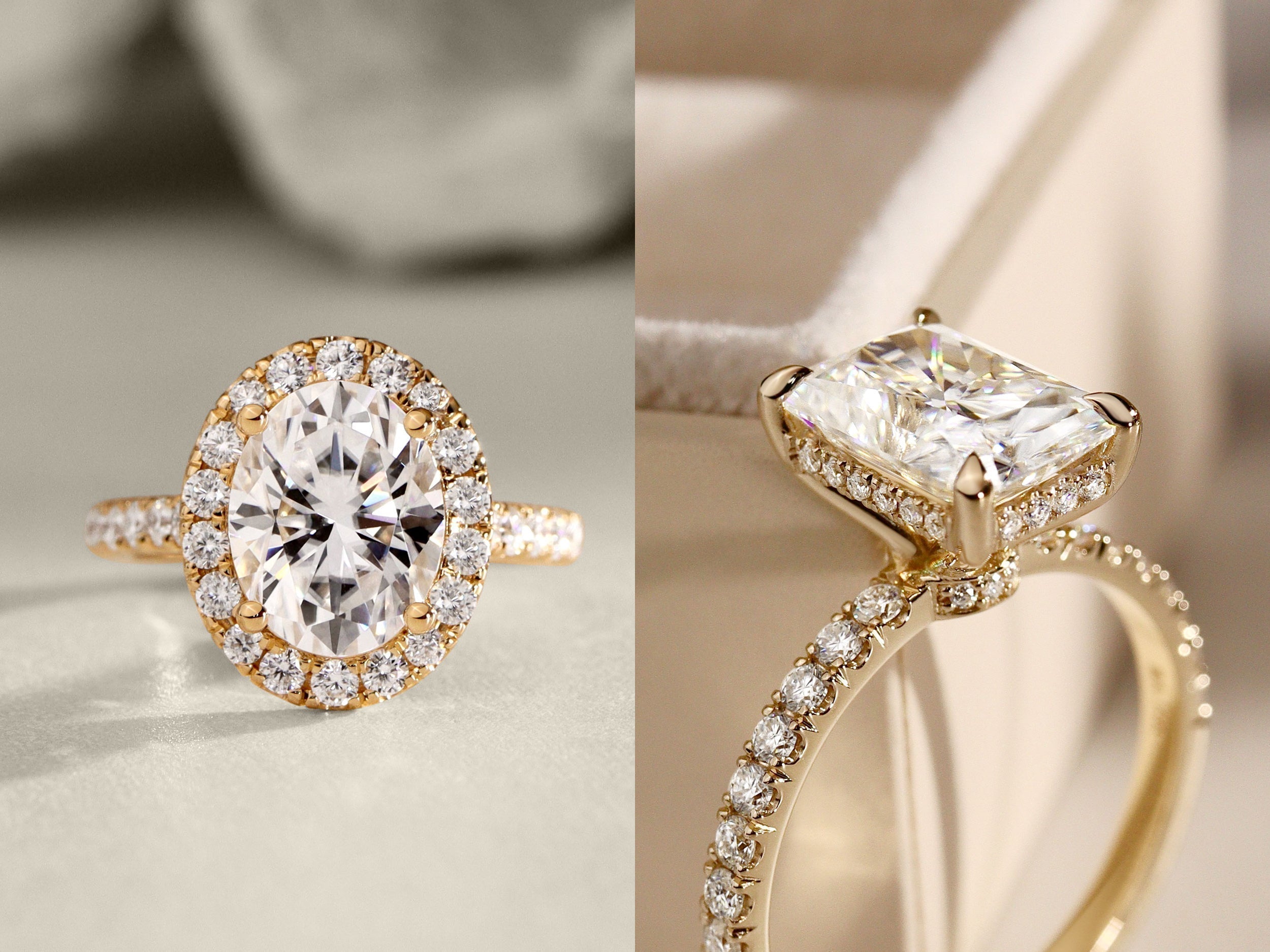
A traditional halo is designed to be seen from above. It frames the centre stone, increases visible sparkle, and can make the entire centre of the ring appear larger.
A hidden halo sits below the centre stone. From the top, the ring may still look like a solitaire engagement ring. The extra sparkle becomes visible mainly from the side or when the hand moves.
At Bellisa Jewellery, clients often tell us that they want “a halo” before realizing that these two styles serve different design goals. The right choice depends on whether you want the halo to be part of the ring’s main appearance or a more subtle detail beneath the centre stone.
Hidden Halo vs Traditional Halo: The Key Difference
A traditional halo surrounds the centre stone with a visible row of smaller accent stones. From the top, the halo and centre stone appear together as one larger focal point.
Traditional halos can be designed around almost any shape, including oval, round, pear, cushion, marquise, emerald, and radiant stones. An oval halo engagement ring, for example, creates more visible finger coverage and emphasizes the elongated outline of the centre stone.
A hidden halo places the accent stones around the gallery or basket underneath the centre stone. It does not normally change the face-up outline of the ring.
This makes a hidden halo engagement ring a good option for someone who likes the clean appearance of a solitaire but wants the side profile to feel more detailed.
The simplest comparison is:
-
Traditional halo: visible from the top
-
Hidden halo: visible mainly from the side

Which Halo Adds More Sparkle?
A traditional halo generally creates more visible sparkle.
Because the accent stones surround the centre stone from the top, they contribute directly to the ring’s overall brilliance. They can also make the focal point appear wider, especially when the halo is delicate and sits close to the centre stone.
A hidden halo creates a more subtle effect. Its sparkle is revealed from an angle rather than becoming part of the main top view.
This is an important distinction. Some clients expect a hidden halo to create the same visual impact as a traditional halo, but it usually does not. Its purpose is to add detail beneath the centre stone, not to create a larger face-up appearance.
The band also affects the final result.
A hidden halo with a plain band can still feel clean and restrained. Pair it with a pavé engagement ring band, and the overall design becomes noticeably more glamorous.
A traditional halo with a plain band keeps most of the sparkle concentrated around the centre. Adding pavé to both the band and halo produces a much brighter, more decorative look.
Which Setting Makes the Centre Stone Look Larger?
A traditional halo usually has a stronger size-enhancing effect.
The outer row of accent stones increases the total face-up area of the ring. From a normal viewing distance, the eye may read the centre stone and halo together, making the focal point appear larger than the centre stone alone.
However, the proportions need to be carefully considered.
If the halo stones are too large, they can compete with the centre stone. If the halo is too wide or sits too far away, the design may look heavy or disconnected.
A fine halo should support the centre stone without taking over the entire design.
A hidden halo does not normally make the centre stone look larger from above. The centre still appears according to its own dimensions.
Clients who want a larger visual presence without using a traditional halo may also consider:
-
An elongated oval or marquise stone
-
Tapered side stones
These options create coverage in different ways and may suit someone who does not want a fully framed halo.
Setting Height and Wedding-Band Fit
A hidden halo can affect the height of the ring, but it does not automatically mean the setting will be high.
The final height depends on several details:
-
Centre-stone depth
-
Basket construction
-
Halo placement
-
Cathedral or non-cathedral shoulders
-
Accent-stone size
-
Wedding-band clearance
Some hidden halos can be built into relatively low-profile settings. Others require more height to make room for the halo and allow a straight wedding band to sit underneath the centre setting.
Traditional halos can also be low or raised. The halo style alone does not determine whether the finished ring will sit high on the finger.
The same applies to wedding-band fit.
A hidden halo engagement ring may allow a straight wedding band to sit flush, but some low-set versions require a curved or custom-fitted band. A traditional halo can also block a straight band if the halo extends outward close to the finger.
During a custom design consultation, we normally ask whether the client:
-
Wants a straight wedding band
-
Is comfortable with a small gap
-
Plans to wear a contoured band
-
Wants the engagement ring and wedding band designed as a matching set
It is much easier to plan for wedding-band fit during the CAD stage than to solve the problem after the engagement ring has already been completed.
Everyday Wear and Maintenance
Both halo styles contain small accent stones, so they require more long-term care than a plain solitaire engagement ring.
A traditional halo places small stones around the exposed outer edge of the centre setting. Depending on the design, these stones may come into contact with surfaces more frequently during everyday wear.
A hidden halo is more protected from the top, but the small stones still need to be cleaned and inspected. Product build-up can collect around the basket and underneath the centre stone, making regular cleaning especially important.
With either style, we recommend:
-
Removing the ring for heavy lifting and strenuous activity
-
Avoiding impact against hard surfaces
-
Cleaning around the basket and underside of the stone
-
Having the accent stones checked periodically
-
Arranging an inspection after a significant knock
A halo engagement ring is not necessarily fragile, but it does contain more individual stones and setting work than a simple solitaire. More components also mean more areas that may eventually need maintenance.

Which Shapes and Stones Work Best?
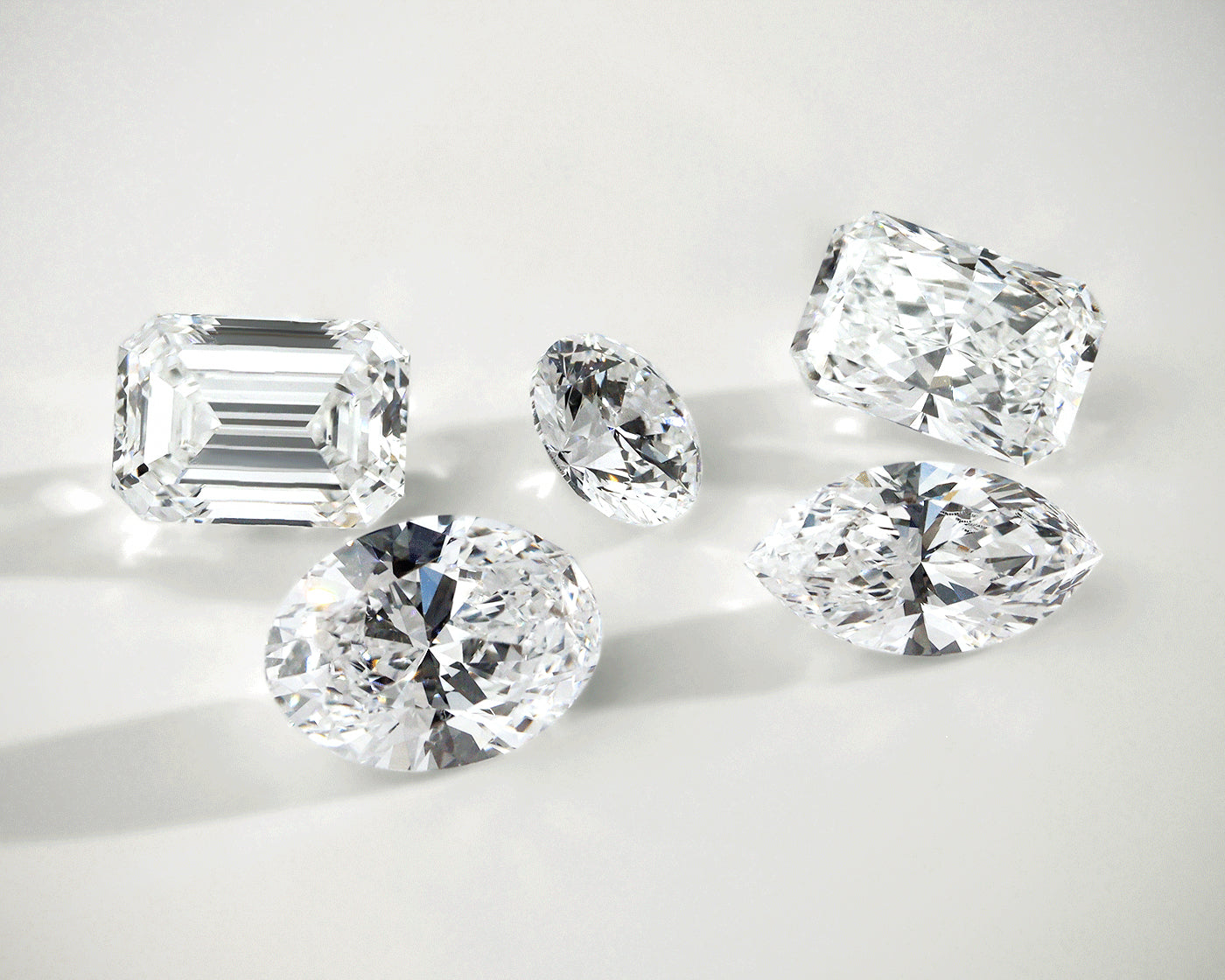
Most centre-stone shapes work with either halo style. The better choice depends on whether you want the outline to feel framed or uninterrupted.
Oval and Round
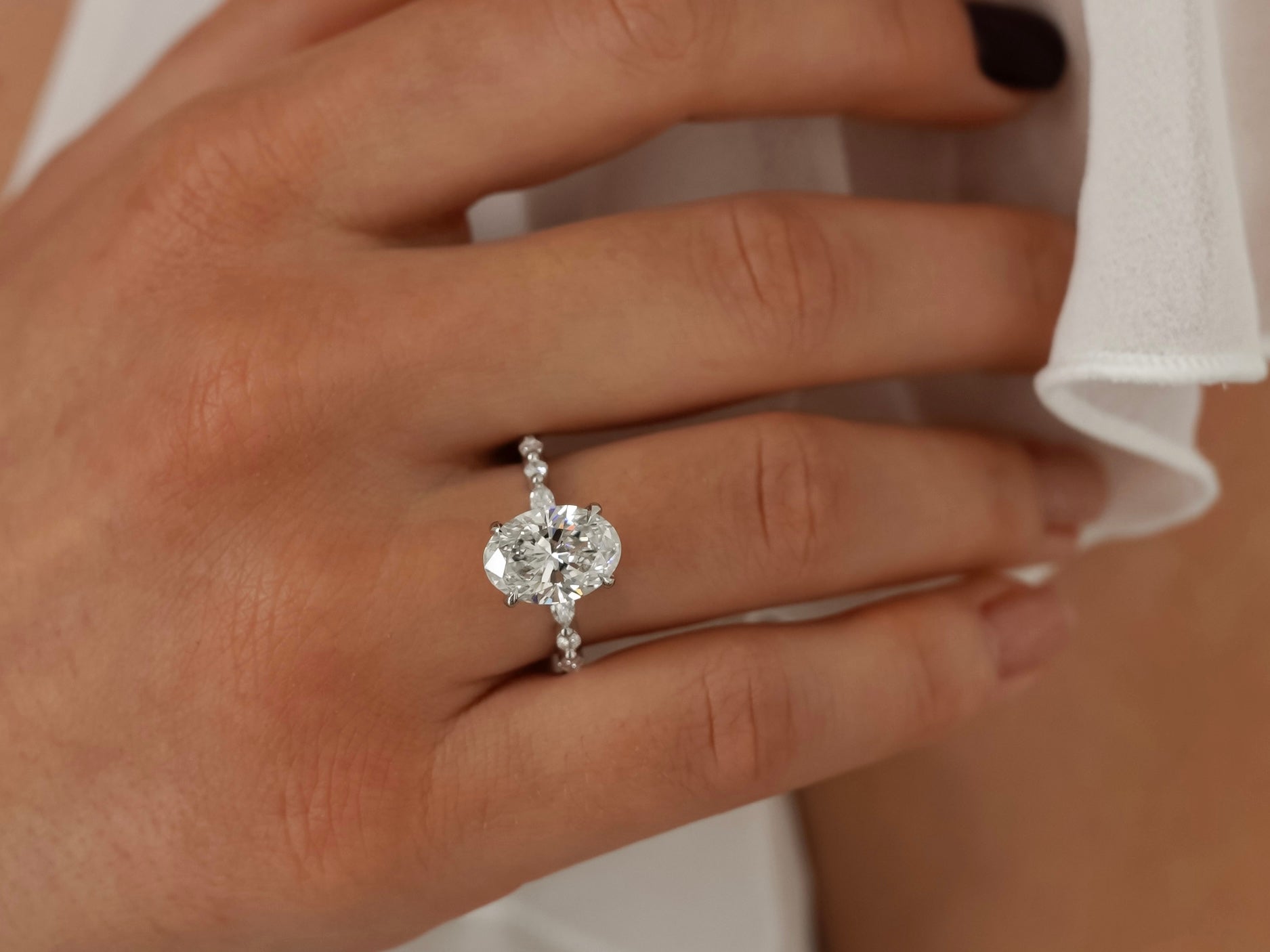
An oval halo engagement ring creates more finger coverage and a noticeably decorative top view. An oval hidden halo keeps the elongated centre stone visually separate while adding sparkle to the side profile.
Round stones work naturally with both styles. A traditional round halo feels balanced and classic, while a hidden halo gives a round solitaire more detail without changing its familiar outline.
Pear and Marquise
A traditional halo emphasizes the pointed silhouette of pear and marquise stones. A hidden halo keeps more of the original outline exposed and may feel slightly lighter or more modern.
Emerald and Radiant
A traditional halo adds brilliance around the structured outline of an emerald or radiant stone. A hidden halo allows the geometric shape to remain clean from above.
Both moissanite and lab-grown diamonds can be used successfully in either setting.
For clients considering a hidden halo moissanite engagement ring in Canada, the main decision is usually how much sparkle they want visible from the top. Moissanite already produces strong brilliance and colourful fire, so a traditional halo can create a particularly bright overall look.
A lab-grown diamond halo ring offers a more traditional diamond appearance. A hidden halo can keep the design close to a lab diamond solitaire ring, while a traditional halo creates more face-up presence.
The halo should complement a carefully selected centre stone rather than compensate for poor cut quality or weak light performance.
Our Experience Designing Halo Engagement Rings
One of the most common misunderstandings we see is the assumption that a hidden halo is simply a smaller or less noticeable traditional halo.
In practice, clients choose them for different reasons.
Clients who select a traditional halo usually want:
-
More visible sparkle
-
A larger-looking centre
-
Greater finger coverage
-
A more decorative top view
Clients who select a hidden halo usually want:
-
A cleaner solitaire-style top view
-
Extra detail in the side profile
-
A modern or understated accent
-
The centre stone to remain visually independent
The proportions matter as much as the halo type.
When we prepare a custom CAD design, we review the halo thickness, accent-stone size, prong placement, setting height, band width, and wedding-band clearance together.
Small differences can noticeably change the final result. A halo that is slightly too wide can overpower the centre stone. A hidden halo placed too low may be barely visible, while one placed too high may make the setting feel heavier than intended.
The goal is not simply to add more stones. It is to make sure every detail supports the overall design.
Which Setting Should You Choose?
A hidden halo may suit you if you:
-
Like the look of a solitaire engagement ring
-
Want subtle sparkle beneath the centre stone
-
Prefer a detailed side profile
-
Want the centre shape to remain clearly defined
-
Prefer a modern or understated style
A traditional halo may suit you if you:
-
Want maximum visible sparkle from the top
-
Want the centre of the ring to appear larger
-
Prefer a more decorative or glamorous style
-
Want greater finger coverage
-
Like the centre stone to be fully framed
Neither option is universally better.
The most useful question is whether you want the halo to be a main feature of the ring or a detail that reveals itself from the side.
Frequently Asked Questions
Does a hidden halo make the centre stone look bigger?
Usually not from the top. A hidden halo adds sparkle beneath the centre stone but does not normally extend its face-up outline. A traditional halo creates a stronger size-enhancing effect.
Which halo adds more sparkle?
A traditional halo generally provides more visible sparkle from the top. A hidden halo adds sparkle mainly to the side profile.
Can a hidden halo be low profile?
Sometimes. The final height depends on the centre-stone depth, basket structure, halo placement, and required wedding-band clearance.
Can a wedding band sit flush with a halo engagement ring?
It may, but this depends on the structure and height of the setting. Some halo engagement rings require a curved or custom-fitted wedding band.
Are halo engagement rings harder to maintain?
They require more inspection than a plain solitaire because they contain additional accent stones. Regular cleaning and periodic checks help keep the setting secure.
Can moissanite and lab-grown diamonds be used in both halo styles?
Yes. Both gemstones work well in hidden and traditional halo settings. The better choice depends on your preferred sparkle, centre-stone appearance, and overall design.
Explore Halo Engagement Rings at Bellisa Jewellery
Bellisa Jewellery creates handcrafted engagement rings in Canada using moissanite, lab-grown diamonds, natural gemstones, and lab-grown coloured stones.
Our halo designs can be customized in centre-stone shape, setting height, band width, metal, accent stones, and wedding-band compatibility.
Explore our Hidden Halo Engagement Ring Collection and Halo Engagement Ring Collection for inspiration, or book a complimentary phone consultation with our bespoke team to discuss which setting may work best for your design.


